
Welcome! You can listen to the podcast above or read the transcript below. To get these updates delivered to your email inbox sign up here: https://lauraaliese.substack.com
Transcript:
Hello, my name is Laura Aliese Miedema and I’m a quiet book coach. I guess for a quiet book coach, I talk quite a bit on this podcast. But what I mean to say is that I like the quiet. I like to be reflective and thoughtful. And so I hope you can be too here with this reflection on time.
I’m just going to talk today a little bit about what’s on my heart. But if at any time you would rather not listen, you don’t have to. There’s never any pressure. I just want to invite you in to talk about time.
So one of the first things I learned about as a book coach, Jennie Nash, who certified me through Author Accelerator, one of the first lessons she said, I distinctly remember it, is that the lesson was writers rush. Writers rush more than you think, Laura, or to our coaches, writers rush, so slow them down.
And I don’t just think writers rush, I think people rush. People rush all the time. I rush all the time. And I wonder what would happen if we slowed down. Writing a book is a long process. So we all know this. It takes a long time.
What a lot of us don’t know is that 80% of people want to write a book but do not finish. So that’s a large percentage, right?
Of those who do publish, 80% quit after three books. So not only are those finishing, finishing books doesn’t happen very often. Those who do finish stop after three. That’s a pretty sobering statistic. And I don’t mean to scare you today. Today is not meant to be scary. It’s just meant to be truthful.
And writing a book takes a lot of time, and those don’t often finish it. And those who do finish it don’t like to do it very long. So what do we make of this? What do we make of this dropping like flies like authors, authors dropping like flies?
I personally know writing a book is very hard, and we want it to happen yesterday. And so when I work with people in my coaching business, one of the very first things I let them know in a discovery call is that it’s going to take time.
And I see their faces sort of just drop, like, it’s going to take time? Come on, like, can’t we just get it done really quick? And the answer is not really. You really can’t do it really quick. And if you do it really quick, it doesn’t It doesn’t really stick together well and it doesn’t meld or mold well to what you’re doing. So this is my happy thought today, which is slow down and it’s going to take some time. But I just want to open up with that is that we’re in the long haul here as coaches.
Like I work with people often for multiple years on one project and that sounds really hilarious. Really horrible, right? Don’t you want to be done in six months? But the answer is it doesn’t happen in six months. It happens in three years. So why am I saying this to you?
Why am I driving everyone away from my coaching business by telling you it would take three years to finish your book? The reason is because I want to be truthful. Authors don’t often let you hear the truth, but not as much as we would like. And so it’s going to be hard to write a book.
And I want to be honest that It takes a real kind of solid stamina to do it well. So when I talk to writers about building their writing life, structuring their time, structuring their writing process, we hear this word structure a lot. A book has structure, a life has structure, a day has structure.
We all need structure in some way to function and just to have routines and ways to hang your hat on things. And structure takes intentionality. I know with Author Accelerator we do a tool called the Blueprint. And if you know Blueprint for a house, you make the Blueprint before you make the house.
And the beauty of the Blueprint, the coaching tool, is that it helps you to slow down and think about what am I building, how am I going to build it, and what is it made of, what is the structure. And today I want us to look at a Blueprint that we have for our time.
That sounds kind of abstract, I know, but what is the plan we have for our time? How will we use it? What will we build with it? And what is it made of? Is it going to last? And that’s a really tough question. Like what is our day? How is our day structured? It’s a big question.
I’m here to unpack it with you today. So I want to give us two things to think about. So when we think of the word structure, we often think of a building. And I want to talk about time today, how you plan your day, how every day looks like for you in the run of the mill, not some vacation day, but like grind day, like what’s going to happen tomorrow when it’s gross weather out and you have all this work to do and when the rubber hits the road, how do you structure your time then? And when I think of time in general, it’s so precious because it’s all we have to really spend We have money, yes. We have other things to spend, but maybe Bitcoin. I don’t know what else you have to spend.
But time is the real currency. And in our day-to-day life, there’s an attention economy. So people are farming our attention. They want our attention. They want us to pay attention. They steal our attention. They steal our focus. It’s really hard to be focused on anything. So I think that’s part of the reason why People don’t finish their books because their attention is stolen or taken or given to something else.
And a big thought I want to just kind of plop down here gently is that what we love structures our time. What we gaze at, what we pay attention to structures our time. And so we can either pay attention to things that last, that will be strong and structured well, Well, we’ll pay attention to things that don’t matter, that are flimsy, and that just sort of flop over every once in a while when it comes to the rubber hitting the road. So when we think of our time as a structure, as a building, what is the purpose of that building?
And I know I’m sounding very abstract here, but it does come back to a point, like, what are we building with our time? And does it matter? Does it last? Is it solid, good stuff that will stand when… When Monday comes and it’s a horrible day and the kids are screaming at you, I don’t have kids but I know they scream, or your husband or your wife or your partner or anyone is just sort of yelling at you, what do you do? Like how do you structure your time? How do you structure your time when everything is coming at you and you have no time at all?
And this is a big question and I know we can’t answer it all but what I want to do Give us thought to is how do we structure our time to have the best building we can? How can we do that?
And I do think the only way to do that well is to slow down and think about it, to be intentional about our time, what we spend it on, what we love, what we give our attention to. Because I feel like it’s easy to get distracted. I get distracted all the time. I’m not here to say I don’t get distracted, but the point is not to get distracted, it’s to be focused. So I want to give us two things, two pictures to think about when we think of structuring our time. So there’s an easy, quick build might be a shed.
You can make a little shed, but you can’t live in it. It’s just a little shed. But if you make a house, Or you make a store or a building department building or a Walmart or a Costco or a Best Buy or any big store you can think of.
The purpose of it is to sell things, to sell things fast, sell things quickly. A lot of us structure our writing time as like a Best Buy, a Walmart, a Costco, a department store to sell things. Life is expected to be like that sometimes where our time is traded for money,
Or all we have to do is just prove our worth by just grinding it out to sell things. And that is not my intention here with structuring our time. We don’t structure our time to last well by buying and selling and just sort of making our budgets bigger. Again, that’s not my focus here.
How do we structure our time to last, to be filled with all the things that are good in life, But that lasts when troubles come, when hard times happen. And we’re kind of in a hard time right now as a society, we’ve always been. And so how do we last?
We can sell and buy a lot of things, sure, but when we die, they don’t go with us and we just sort of, they’re just not there anymore, you know? And so how can we last and keep things in our lives that help us become better people? Because I’m of the persuasion that people last.
People last longer than death. People last a long time. That’s my belief. Not everyone shares that belief, but I think there’s more after death. And I think that if we build our lives smartly, wisely, with God’s help, we can be built to last and to make a real impact on people that is not flimsy or flops over.
It stands the test of time. So, again, here’s one way to structure your time, to buy and sell as quickly as possible, to get that book out there, to get the big deal, to get a three-book contract and just go. That’s one way to structure your time.
I would say that’s structuring your time like what we call in Canada here a Costco. Costco is nothing against Costco. They do a lot of great things. But I want to use them as a picture for what that buying and selling looks like. For us, it’s a store that we can buy and pull.
You can buy big jars of peanut butter. Like there’s so much peanut butter in this jar because it’s so big. You can buy everything oversized at Costco. And I think people really need that. And I’m not trying to bang on them or anything. But it’s very different to build a Costco quickly, buy and sell fast, as opposed to building a cathedral. So there’s not many people around that I know who are building a cathedral with their time. This is what I want to get at that. The structures that we make have purposes in our life. So what we build with our life matters.
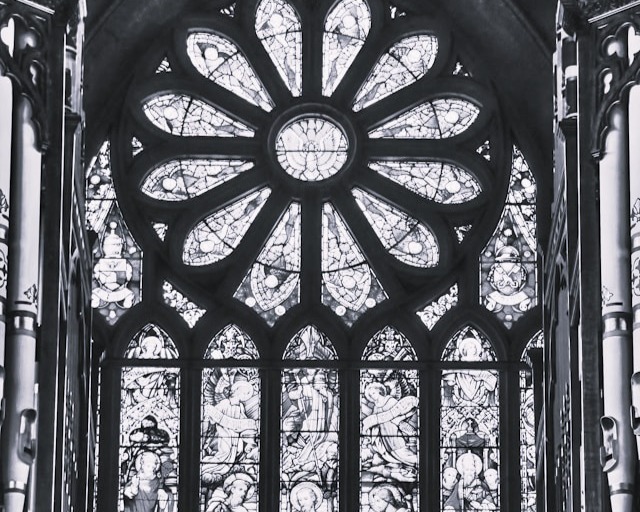
We can build a Costco or we can build a cathedral. And cathedrals are hard to build. They take years and years and years and they take intention. And what I’m trying to say, even though I’m not saying it very well, is that writing lives can be structured to be like a Costco or a cathedral.
And I think cathedrals are much more hard to build, take more time, But they last centuries, dare I say, millennium. I don’t know the longest lasting one, but they last a long time. But they don’t get built in a day and they don’t get built by one person.
They get built over time by a huge amount of people with intention. And that might sound great and fun. Let’s build a cathedral. Let’s go start that today and keep on working on it. But I don’t know about you, but I’m not a very good cathedral maker. I lose my focus.
I just can’t do it for the long haul. It takes a lot of time and focus to build your life steadily, strongly, to build it solidly. And it’s not easy at all.
So I’m the first to admit that today I got distracted very easily. I almost didn’t do this post because I was not feeling well. But also I got distracted by, I ate a bag of chips. Like everyone eats bags of chips, I know that. But I was like not doing well and eating a bag of chips. So I get distracted too. I feel like I don’t make the most of my time just like anybody else. But I feel like Cathedrals, something, a building, a structure of time built to worship God or built to last over centuries, that’s where my heart is. That’s what I want to build. I don’t want to build something that just buys and sells.
I want to build something that draws our gaze upward, that is beautiful, that is reverent, that is when you walk into it, it just feels sacred. I want to treat my time like it’s sacred. Because we only have so much time and I feel like it’s worth spending well, building well, living in well.
So when I think about building a cathedral, I think, man, I’m not a good cathedral builder.
I’m better at building a shed. Like I could make a shed like nobody’s business, but a cathedral, that’s a little bit out of my wheelhouse. And I wonder how can we go about slowly building over time something that has impact?
And I don’t think there’s an easy way to do that, but I think there’s a good starting place. And so a lot of people might say you need to study hard, you need to read all the books, you need to get the rest course, you need to gather information to build the best cathedral.
Like you have to just study or you have to work hard or you have to. And those things are not. They really help to study and do work hard and all those things.
But what I think of a building, it’s designing first the foundation. And so what you build your life on, what you build your time on, what you give your attention to, what you gaze at, what you love with your whole life, this is what is the foundation of your building. This is what anchors you in the storms. This is what keeps you going and what keeps you sane and what keeps you grounded. What is that thing for you?
I wonder what it is. For me, I would love to say that I ground myself all the time, but I actually have anxiety and I often get ungrounded very quickly. And I often feel distracted, unfocused, feeling like I’m just going in two directions at once. But when I’m having my better moments, I’m grounded in my faith.
It anchors me in a way That nothing else can. It’s a foundation. For me, that’s Jesus. That’s the foundation of my life. I want it to be that. Sometimes I don’t do that, but that is a foundation that stands. You might be thinking, why is she preaching at me? I’m not trying to.
I’m just trying to be honest with you that I haven’t found any other foundation that really is solid. And I would listen to anyone who would tell me a different one. I would have a great conversation. I’m not trying to say that I know everything, but from my experience, when people really dig into who Jesus is and what he does for them and the life he gives, when it’s really true and not just the show, it’s transformative. It’s changed my life. And I’ve been around church for a while, but when I started to get to know Jesus, it made everything come alive.
And I’m not perfect at all by any means, but I just know when you find something that works and find something that gives you life, you talk about it. And so I just want to say that for me, at least, I found no other foundation for building my time and structuring my day that actually works than Jesus.
And I can’t say that I know everything, but for me, it’s been lifesaving. I’ve had really hard times in my life, times when I just didn’t know right from up and I didn’t know how I was going to get through. And I simply prayed. And it sounds like Well, yes, you can pray, but will he answer?
And sometimes I just, I feel like we need to cry out to God and say, I need help. I can’t do this on my own. I can’t build a cathedral. I can’t. And I’ve come to the end of myself. I don’t know if you have yet, but I think people, we often try, try, try and find out that we just can’t and then we give up. I know I’ve done that. But I just want to say don’t give up because there is a foundation and there is a master builder and he can help you make a cathedral with his help. And it takes time, it takes intention.
But I think that when we give him the blueprint, it can change what we build and it can change how we structure what we do. Something I’ve started doing is something called Daily Office. And it’s a practice from the church a long time ago, but It’s basically stopping in the middle of your day at any time that you set up ahead of time and just stopping and centering yourself and thinking about what’s important to you and that does happen to be God.
So it’s like praying in the middle of the day when everything’s crazy and rushing around you saying, God,
you’re the center of everything and I need to slow down and just sort of gaze at you, draw my attention to you and be still and be quiet. It sounds so simple, but if you try it, It gives you a calm in the center of the day.
And I really recommend doing that or something similar where you slow down the middle of your day and get centered on what’s important. It changes the flow of your life and it changes the flow of your day. So to have a center of your structure of your day, to be a quiet, peaceful gaze at God or whatever else is important to you, That quiet center is so important to a life, not a frenzy, not of buying and selling and rushing and craziness. It’s a center of quiet and still and calm and knowing who you are in that cathedral. It’s not often the cathedral that we make.
It’s the cathedral we live in that’s all around us. So if you ever notice the sky, I know it’s not like there’s not like an arch. You know, at the top of the sky, but we live in a cathedral made by God’s hands. And we are in a creation that is beautiful. We take care of it.
And so often we don’t have to build the cathedral ourselves. We live in one. And to structure our time that we gaze up at the sky and say, I love you, God. This is a beautiful building you’ve made. Help me to take care of it. And so I just want to leave you with that is that Our structuring our time doesn’t have to be frenzied, rushed. It can be sometimes because we are a rushed people.
But if we slow down enough to look around us and say, we are in a beautiful world, let’s take care of it. Let’s honor what we have. Let’s honor the people that we know and love. And treat our time as sacred. Treat our time as something to be spent Enjoy and love and kindness toward others. It changes the whole flow of our day. It slows it down. It helps us to see the people in front of us and to love them, just like we’re loved in the Cathedral of Time.
I hope I haven’t been too abstract or gone too far in my own beliefs. I honor those who believe differently from me. I’m not trying to push anything down anyone’s throat, but I just want to share honestly about what I found to be true. But if you have any questions or comments, you can send them to me by email, lauraaliese@gmail.com. Again, I’m happy to have you here and just be encouraged that it can take time, but you can slow down and take it at the speed that you can take it. And please know that I care and that I’m glad you’re here. Take care.