
Welcome! You can listen to the podcast above or read the transcript below. To get these updates delivered to your email inbox sign up here: https://lauraaliese.substack.com
Transcript:
Hello, my name is Laura Aliese Miedema and I’m a quiet book coach who does happen to talk a bit on this podcast and I hope you’ll excuse me for last time’s post that went a little bit long. I’m finding I like to talk too much and maybe need to be a little more quiet, but I’m just glad to be here and be with you.
I have just hopefully a shorter thought tonight to talk to you about and it’s the idea of relationships in writing so we have relationships in writing between us and the work so with our books we have a relationship with the book we have a relationship with ourselves we write we also have relationships with our publishers and our marketing help and our social media help if we have them we also hopefully have a relationship with our readers And the people in our family who read our books and the people that we know from our community who reads our books.
And these are a lot of relationships because writing in itself is a form of communication, which is like a circuit that needs to be closed for it to actually become full circle. So you speak something or you write something and it finishes the circuit by reaching someone else and impacting them and then telling it back to you. So without that readership, something’s lost. Communication is so important.
And relationships, like anything, deserve care and attention. And I see a lot of people, especially in the coaching world, but also writers as well, who are giving up on relationships, who are bowing out, or maybe people who are taking the opposite approach, which is barging through relationships, sort of pushing their own way, making their presence heard, and getting what they want out of something. Not just in like marriage relationships or family relationships, but I mean like in publishing relationships too or coaching relationships or just reader-writer relationships.
We can either just disengage like it’s so easy to do. We don’t want to deal with some things and we just want to disengage. Or perhaps we just want to get our way and we will barge through. And I want to talk about something different today. But first off, before we get there, I just want to talk about this idea that we are all one family.
So I know this sounds sort of a little weird, but we’re all the human family. And when we say, I don’t want to engage with you anymore, it’s like we’re breaking up the family. When we barge through and do it our own way, we’re We’re hurting the family. When we say mean things about people, we’re hurting the family. And so I want to give this idea of how we treat other people is like how we treat the family.
You might have heard of Mr. Rogers. I really like Mr. Rogers. If you haven’t heard of him yet, you should go look him up on YouTube. But he was all about the neighborhood, being a good neighborhood for people. And I just really resonate with that idea.
But this idea of bowing out or barging through or just totally just disengaging. I get it because it relationships are hard and it can be easy to just dispose them, right? Dispose of them, just move on to the next person. I get it. It’s hard. But what I want to give us an idea for today is why sometimes writing can be lonely and restless, often because we feel like we Our relationships that feel lonely or we feel restless like we have no direction.
Our writing might feel like it’s depleted. We’re distant from the work. Our relationship to the work itself can get fraught. We can get pent up energy. We just want to do something different besides the project we’re doing. Or maybe we’re just mad at our publisher. That happens too, right?
We’re mad at our publisher or our marketing help or we’re just mad at marketing. Maybe we just don’t like marketing. And we have obstacles to relationships all the time. And we have options, right? We can disengage. We can barge through and get our own way.
But I want to give us a different option today that you might not have thought about. And that option is what’s called the dance. I know that sounds funny. Like, why would you dance with your book? Or why would you dance with a publisher? Why would you dance?
It’s a metaphor for a different pattern for being in the world with people and books and all these sorts of things. I think it’s a really important pattern and I think it can help us in our writing life to feel less lonely and less restless and more connected and more purposeful.
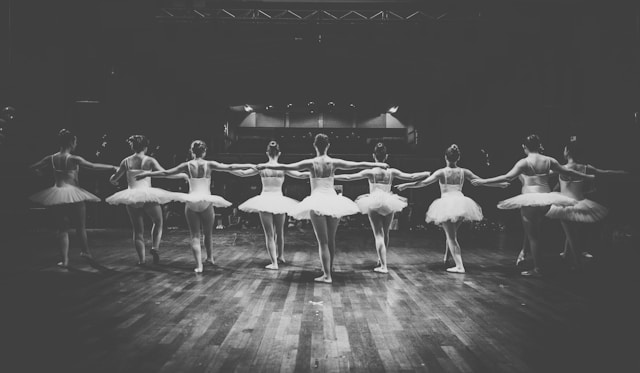
So it comes from this idea that relationships are like a dance. So one or two or more people are moving in and out and around in a pattern that is beautiful and is bigger than themselves. It’s purposeful movement. It’s time to music. It’s rhythmic. It’s beautiful. And there’s a beautiful synergy between the people.
They become the dance, and it’s beautiful, beautiful to watch dance. And relationships can be like that, where everyone is moving together, one purpose, one direction, or in several directions in time. And it all is coordinated. It moves together. There’s unity. This is what we’re striving for in our relationships, in writing, in life.
And I wonder if we’ve lost a little bit of the dance because we feel like that’s sort of an old idea. That maybe dancing like, you know, in Jane Austen where they have that line of dancing, you know, that’s kind of old passe. We just want to do solo dances or we want to do mob dances, things like that that are okay, I guess, but I want to bring us back to a pattern that I see all of life, but also what I think is in the Trinity, which is the Godhead or God. That dance happens there too.
That might seem like an interesting way of thinking of God as a relationship between people, but in the Christian tradition anyway, The Trinity is three persons in one. God is three in one. And the technical term for it is perichoresis. It’s a Latin word, but it just means kind of a little bit to move in and around like a dance.
And when I think of this, I was helping somebody with their project on this very term. And it means to kind of, to be perichoresis, it means that each partner in the dance respects the other person enough To not override them, but it doesn’t also let them override you. So every person is respected in the dance, but they do everything in the dance to help the dance, not so much for one person or the other. So nobody gets absorbed in this relationship. Everyone is distinct. Everyone has their own boundaries. Everyone is their own person, but they’re moving together in unison for something bigger. I think that’s really cool. And for a bigger purpose.
And God dances, the persons of God dance. It’s a really amazing thing to think about and how we can join that dance.
But relationships, you think about it as a give and take back and forth, a dance. And I think this is where we often feel lonely and restless because we’re not dancing at all. We’re sort of trying to be solo shows or maybe we’re trying to be a mob. Mob dance, like a brawl or something. But we have a lot of energy that we can use to dance together with other people for bigger purposes. And when we see life as a dance, we respect other dancers.
We respect everyone in the dance, but it’s all for a larger purpose or coordination. It’s about the unity of the group, but also the parts of the group don’t get absorbed in the group. So we can be distinct, unique. Be part of the group, but not be absolved in the group. Do you know what I mean?
So everyone is a unique individual, but then we partner together to make something bigger than ourselves, but we never lose ourselves in that. It’s really interesting, really cool idea. So how does that look like in a writer’s life? Well, first of all, it means you respect your publisher, you respect your work, your writing, yourself.
You respect those other people in the community who you don’t really like as much, but you still tolerate them, you know? It’s kind of like thinking we’re all in one family, so we’re going to respect each other and love each other, even when it’s hard. It sounds hard, right?
Like, to not give up on people and to not barge through, it takes a lot of dancing ability and energy to do that. And I want to mention that it’s not easy. I’m not saying it’s not easy, but I’m saying it’s worthwhile. To dance in community with people, to not be absorbed in community,like to be totally defeated or downtrodden, but still to contribute to the whole, right? And to be unified with other people for the better good, right?
And so as a writer, that means when you have your publisher, you and your publisher work together For a greater purpose. Or you and your friend that you’re on a podcast with, you’re working together for a greater purpose. You’re coordinating your work. You’re synergizing. You’re adding together to something bigger than yourself. And you’re respecting each other so that no one gets overridden in this. Everyone is respected. Everyone is loved. Everyone contributes to something bigger.
And in marketing, you know, marketing is this big thing where we think we have to push ourselves on people. It’s a give and take. It’s a dance. It’s not meant to force anyone to do anything. It’s not meant to say, you must do this or look at me. I’m so good.
Or it’s meant to be a dance where it’s like, I can help you. You can help me. Let’s do something bigger for the whole community. And so it’s interesting to think about how we could be less lonely and we could be less restless by dancing in unison and in community with people who perhaps are a little bit different than us. But again, there’s that unity and diversity, that distinctness of people that doesn’t get overridden. We both work together for the greater good. So again, this pattern we find in the Trinity can trickle down to all of our relationships.
How we treat relationships really shows what we think about reality, what’s true in life. You know, I think a lot of people might think of relationships as discardable or maybe disposable, maybe not needed as much, or maybe they’re really needed and they’re over-needed, like I must have a relationship or I’m not worth anything, right?
But there’s lots of different views of relationships, but I’m not meaning to push mine on everyone else’s, but I’m just saying I feel like there’s a possibility that the idea of a dance with other people could make writing, publishing, marketing networking much more human, much more beautiful, much more dance-like.
So if you are feeling lonely and restless in your writing, I just want to say I’m here for you. I have free coffee times. You can come and visit. We can have a talk just to see how we can get you connected to community and get you connected back into camaraderie and people that are on your side and working together for a greater purpose.
So again, you can sign up for a free coffee at https://lauraaliese.com/coffee. I’ll put those links in the show notes. You can get that there. I’d love to have a coffee, talk a little bit about your work, and see how I can support you. But again, think about this idea of a beautiful dance where everybody is in unison and doing this great, amazing thing because we love each other, because we’re one family, because we’re pulling in the same direction.
And I think writers have a unique ability to touch hearts and minds with their words and so you have such an opportunity to unite people with what you’re doing instead of dividing people. I think we can come together and make something beautiful happen in the world just by following the pattern we see not only in the Trinity but also in healthy relationships. So that’s what I have for you today.
And again, I’d love to have coffee sometime. So take care and we’ll talk later.